

Vilhelm Hammershøi: First Look
| 1 of 4 | Rooms, silence, thresholds, and light that lingers

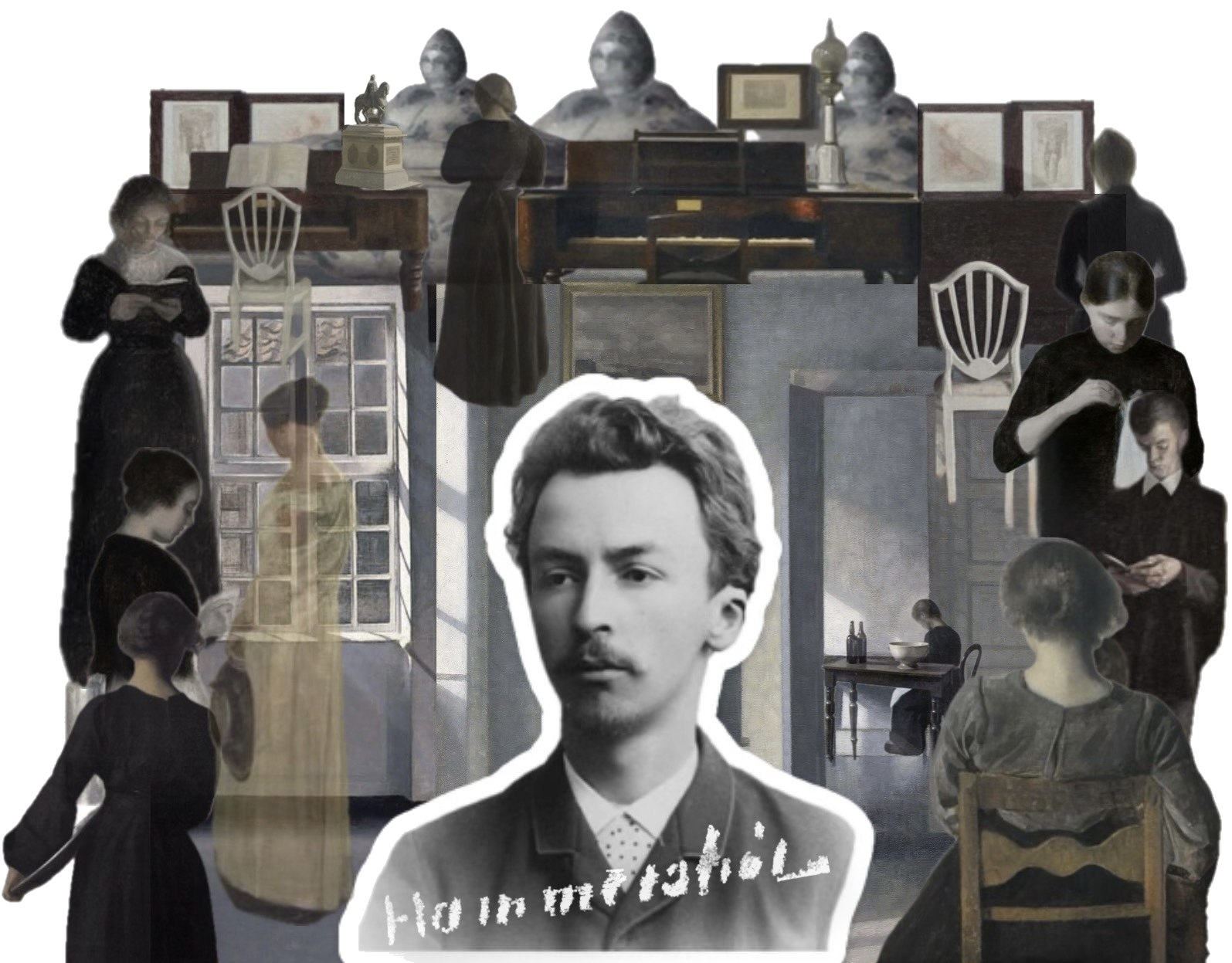
“Hammershøi is not one of those about whom one can speak quickly. His work is wide-ranging and slow, and at whatever moment one comprehends it, it will always provide an opportunity to talk about what is important and essential in art.”
—Rainer Maria Rilke, 1905
After visiting Hammershøi in Copenhagen in 1904 Rilke got so inspired by his work that he decided to write an article and an essay on the Danish artist. Sadly, after about a year of deliberation the piece was ultimately abandoned. Hammershøi was so reserved that Rilke felt he couldn't grasp the essence of his art. Nonetheless, we still have some of Rilke’s writing on Hammershøi from his correspondence which is invaluable since Hammershøi left almost nothing behind for biographers to work with. Anyone writing about him ends up quoting the same handful of interviews, a few letters, what other painters remembered of him. Which is exactly why this month’s deep dives will spend their time going further. The plan for July, as always here, is to get past the material every article recycles and toward what doesn’t usually get discussed.
Hammershøi was called a “modern Nordic Vermeer” already in his own lifetime, and in Denmark he remains something like a national icon. The reputation rests mainly on the interiors without people in which the atmosphere doesn’t vary much whether he is painting a long sequence of rooms or pale light in a dim, sparsely furnished space. It is cool, sometimes genuinely unsettling, and the melancholy in many of the pictures feels current in a way that is hard to account for.
At the Academy his manners and education seem to have set him apart from most of the other students, and the quietness people noticed in the young man never went away. Add the wider mood of the period, all that uncertainty and sense of things coming apart, and you get the standard picture of a melancholic who lived facing inward. However, the record complicates this. Hammershøi was rather active in the art scene of his day, he traveled a great deal, and the longing for belonging that people assume he suffered from privately went somewhere specific. It went into the paintings, where he worked at it with real insistence.
