

The Hidden Art
| Pt. 4 of 4 | A nearly naked artist, a four-year negotiation, and the system Rops built to keep his art from the public

Slow Looking 2026 | Slow Looking March: Félicien Rops | Ways of Looking
“You know that I am a singular being, very incomprehensible to many…”
— Rops in his letter to photographer Nadar, 1890
When it came to exhibiting Rops preferred the background: a small circle of patrons who suggested subjects, helped circulate prints, and passed editions between collectors. He called it ‘druidism’ (more on that later), and that was how he wanted his work to exist, by moving quietly through networks of people who already knew what they were looking at.
Which makes it strange to visit the Kunsthaus Zürich this month, where an exhibition—The Laboratory of Lust—puts a selection of his scandalous work on view. I don’t think Rops would have loved the idea and that title, and I am sure the whole premise runs against everything we’ve spent this month uncovering: work that was designed for discretion, now hanging in rooms with wall labels and audio guides. What was once encountered through thresholds is now presented all at once.
Perhaps whether he would have liked it is beside the point. The artist is dead and his work outlived the conditions he built for it. But knowing what we know now about how carefully he controlled its circulation, the exhibition becomes something more interesting than just another survey of provocative images.
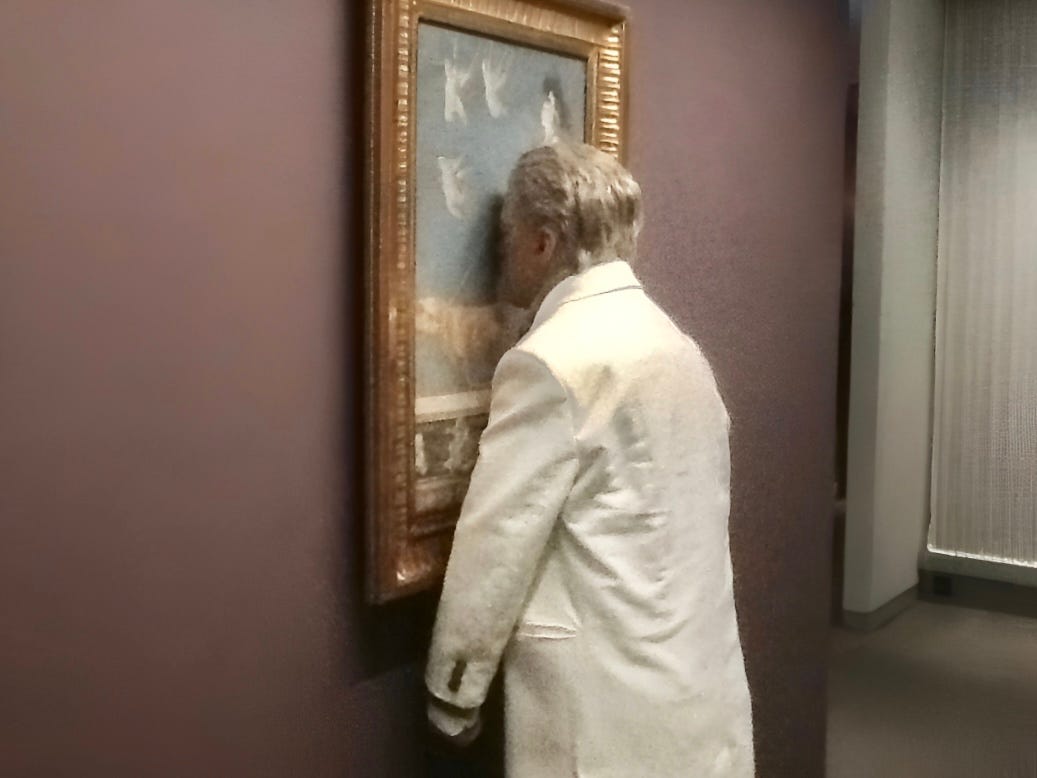
By the time I arrive at the exhibition Rops is no longer simply the illustrator of Baudelaire’s scandal. He is a writer, a polemicist, and an obsessive correspondent who thought constantly about the moral contradictions of modern culture. The question therefore becomes whether the exhibition allows that intellectual dimension to appear, or whether it prefers the safer image of Rops as a provocative but ultimately decorative artist who successfully depicted the malaise of his era.
What I found in the archives in Zürich this month changed how I understand Rops entirely. The exhibition shows the work but the catalogues, the letters, the memoirs of the dealers who knew him reveal something the wall labels don’t: an artist who built an entire system for controlling who could see his art, how they encountered it, and what it meant when they did.
What follows below: The exhibition frame | Rops and “druidism” | What the exhibition leaves unexplored | Memoirs of an Art Dealer | Rops sold his work while being almost naked | Rops’s controlled circulation
